First-known freshwater contagious cancer spreading among catfish in Vermont lake
According to a study published in the journal Nature, since 2012, these catfish have shown high rates of raised black lesions, leading researchers to investigate if the lesions were cancer that could be spread among species.
CANNIBALISTIC JELLYFISH ARE INVADING THE PRECIOUS LAGOONS OF VENICE WITH NO WAY OF REMOVING THEM
The high number of melanomas led scientists to believe that the cancer was caused by a contaminant or contagion, thus beginning the testing to determine what caused the cancer, as Lake Memphremagog serves as drinking water for 175,000 people.
One hypothesis scientists had was that Tropical Storm Irene, which caused extensive flooding in 2011, led to reduced water quality of the lake because of runoff pollution.
Preliminary genomic analysis showed that the tumors were distinct from healthy tissue. This suggested the cancer may be transmissible, spreading between hosts like a contagious parasite.
The study noted that transmissible cancers have only even been noted in three species: dogs, Tasmanian devils and multiple species of bivalves like clams, oysters, mollusks and scallops.
In transmissible cancers, tumor genomes across different hosts match each other more closely than they match their host’s own DNA — showing they all share a single clonal origin, the study said.
To test if the cancer had a clonal origin, scientists took tissue from healthy fish along with normal and tumor tissues from fish with confirmed lesions from all stages, from mild to severe.
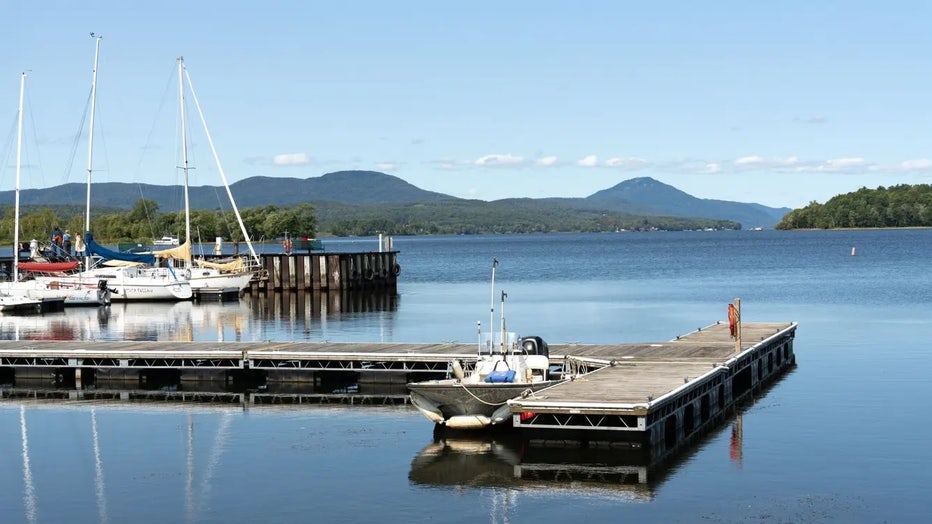
Lake Memphremagog, northern Vermont, looking north into Quebec. (Marli Miller/UCG/Universal Images Group / Getty Images)
The study said future sampling of populations of affected brown bullhead catfish will address the age and origin of this clonal cancer, which is also essential for understanding the evolution and the way it impacts the brown bullhead population.
Original source: https://www.livenowfox.com/weather
